
Online Gambling Regulation: Navigating the Complex World of Online Gambling
The digital dice are rolling, and the stakes are higher than ever. The online gambling market is exploding, projected to reach staggering heights in the coming years. This surge underscores the increasing need for robust regulation within the gambling industry. But why all the fuss about rules? Well, a well-regulated online gambling environment isn’t just about ticking boxes; it’s about ensuring a level playing field where fairness reigns, players are shielded from harm, and responsible gaming practices are not just encouraged but enforced.
Regulation offers a multitude of benefits. It provides essential player protection, ensuring that deposited funds are safe and that games are fair and transparent. It also generates valuable tax revenue that can be channeled back into communities. However, the path to effective regulation isn’t always smooth. Regulators face the constant challenge of keeping pace with rapid technological advancements and enforcing rules across borders. Concerns are also raised that excessive regulation could stifle innovation and drive operators to unregulated markets. Navigate the complex world of online gambling regulation with us, where we’ll delve into the key aspects and explore the ongoing debate surrounding its role in shaping the future of this dynamic industry.
Why Regulate Online Gambling?
The regulation of online gambling is essential to shield individuals, maintain integrity, and curb criminal operations. Without proper oversight, the online gambling world can become a breeding ground for various harmful activities. Regulation serves as a critical safeguard, ensuring a secure and transparent environment for both players and operators. Unregulated platforms are prone to risks like addiction, fraud, and underage gambling. Real-world cases show that regulation has prevented or mitigated these harms. For example, regulated casinos actively check the age of their players preventing underage gambling.
Consumer Protection Imperative
Protecting vulnerable players is a primary driver behind online gambling regulation. Many tools can help protect players, such as deposit limits, self-exclusion programs, and reality checks. These measures empower individuals to manage their gambling habits consciously. Deposit limits allow players to control how much they spend, and self-exclusion programs offer a way for individuals to take a break from gambling. Responsible gambling measures make a difference for a player.
Combating Crime and Ensuring Fairness
Regulation is vital in the fight against financial crime and ensures the integrity of online gambling. Know Your Customer (KYC) and Anti-Money Laundering (AML) regulations are essential tools. These regulations require operators to verify the identity of their customers and monitor transactions for suspicious activity. The benefits of ensuring fair gaming outcomes for players and operators can’t be overstated. Regulatory oversight has been used to disrupt illicit activity.
Types of Online Gambling Regulations
Licensing and Compliance
Acquiring gambling licenses is a cornerstone for any online gambling operator, acting as the golden ticket to legitimacy and market access. These gambling licenses are not handed out freely; licensing authorities meticulously assess applicants. Factors such as financial stability, a squeaky-clean criminal record, and robust responsible gambling policies are all under intense scrutiny. Some gaming jurisdictions operate with stringent licensing requirements, demanding extensive documentation, audits, and background checks. Others may adopt a more lenient approach. Regardless, once licensed, operators face ongoing compliance obligations. These can include regular audits, adherence to anti-money laundering regulations, and the continuous monitoring of player activity to detect and prevent problem gambling.
Taxation and Revenue Generation
Taxation is a vital aspect of online gambling regulation, serving as a significant revenue stream for governments. The Gross Gaming Revenue (GGR) tax is a prevalent taxation model, where taxes are levied on the total revenue generated by operators after paying out winnings. Other models exist, each with its own set of advantages and disadvantages. The economic impact of online gambling taxation can be substantial, with revenues often directed toward funding public services, education, or responsible gambling initiatives. However, striking the right balance is crucial. Excessively high taxation rates can incentivize operators to seek out less regulated jurisdictions or even push players towards illegal, untaxed gambling platforms.
Technical Standards and Game Fairness
At the heart of ensuring a trustworthy online gambling experience lies the enforcement of technical standards and the guarantee of game fairness. Random Number Generators (RNGs) are the unsung heroes, algorithms that produce unpredictable sequences, determining the outcomes of casino games. Equally important is the Return to Player (RTP) percentage, indicating the proportion of wagered money a game is statistically likely to pay back to players over time. Independent testing agencies play a pivotal role in verifying game fairness and RNG integrity. For example, I once consulted during a game certification project. After running billions of test rounds, the agency found a minor deviation in the card shuffling algorithm, a flaw easily missed without rigorous testing. Such agencies act as watchdogs, ensuring that games are not rigged and that players have a fair chance of winning.

Impact on Players
Online gambling regulations significantly mold the player experience, starting from the initial registration to ongoing engagement. A critical aspect is the implementation of Know Your Customer (KYC) and Anti-Money Laundering (AML) procedures. These protocols, while essential for security and preventing financial crime, can sometimes lead to a more involved onboarding process. Players might need to provide identification and proof of address, which, although a safeguard, can occasionally feel intrusive.
Regulations also bring deposit limits, wagering limits, and self-exclusion programs to the forefront. These tools are designed to empower players to manage their gambling habits responsibly. Deposit limits allow individuals to control the amount of money they spend over a specific period, while wagering limits restrict the size of bets. Self-exclusion programs offer a more drastic measure, enabling players to ban themselves from gambling platforms. Research suggests that these responsible gambling tools can be effective in mitigating the risk of gambling-related harm. For the independent player, these measures provide a safety net.
Safer Gambling Measures
The importance of safer gambling measures is constantly growing, as more and more gambling operators have started to use tools such as prompts, deposit limits and self exclusion. These tools protect players by providing a framework for when gambling becomes a bigger problem. I remember overhearing a conversation at a conference where a player spoke about being able to identify when his gambling gets too much, and use self exclusion when required.
The Gambling Commission has assessed some of these online games design changes in their many reports.
Effects of Gambling Limits
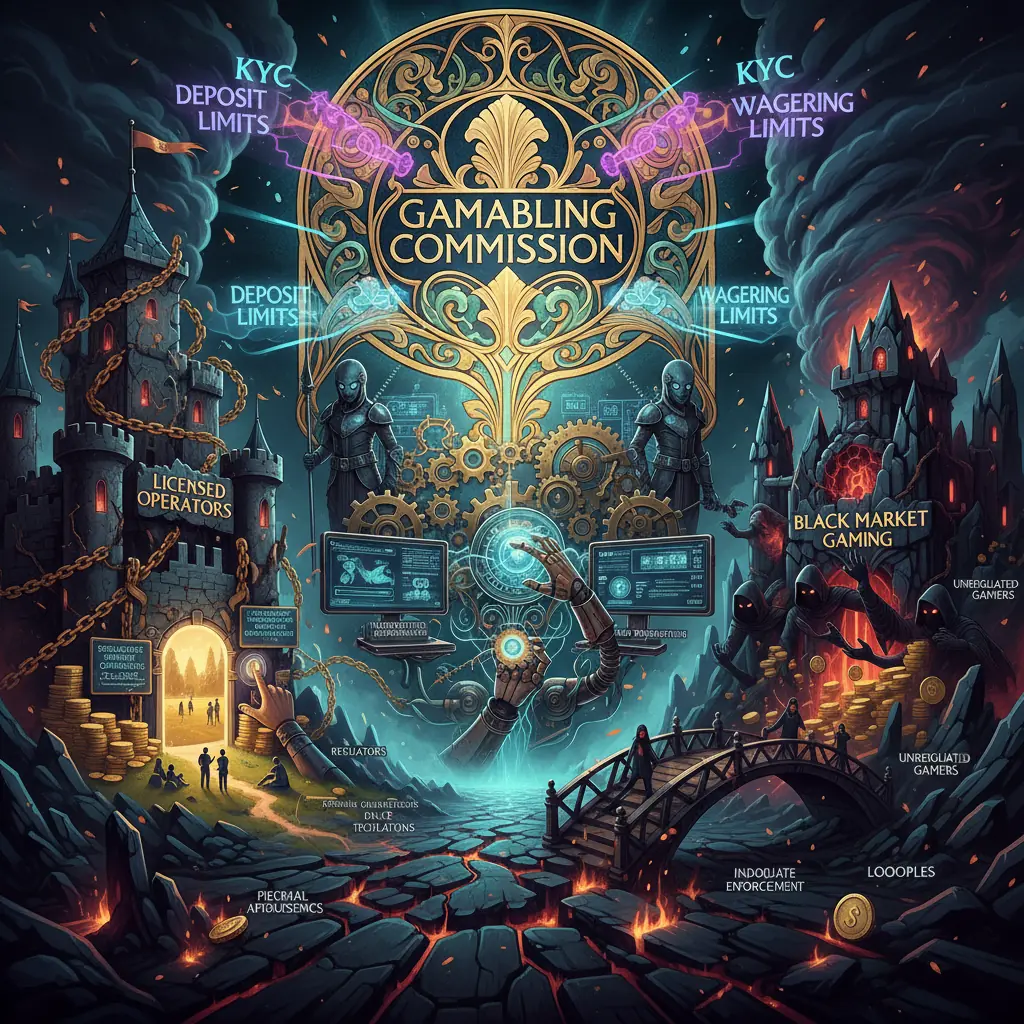
Restrictions such as deposit limits have led to a rise in BMG (Black Market Gaming). Although safer gambling is the aim of the gambling operator, the restriction can have undesired effects. One gambling commission report called ‘Illegal online gambling: Consumer engagement and trends’, found that players moved to the black market to avoid deposit limits, and that it has had devastating effects.
Impact on Operators
Online gambling regulations present a complex landscape for operators, impacting their operations in multifaceted ways. One of the most significant challenges is the escalating compliance costs. Meeting the requirements for licensing, data security, and responsible gambling measures involves substantial investment. These costs can be particularly burdensome for smaller operators, potentially creating a barrier to entry and favoring larger, more established companies.
Market access is another critical area affected by regulation. Different jurisdictions have varying rules regarding which operators can offer services within their borders. Some countries may prioritize domestic companies or impose strict licensing requirements that are difficult for foreign operators to meet. This fragmentation of the global market can limit an operator’s ability to expand its reach and diversify its revenue streams. However, obtaining licenses in regulated markets also provides operators with credibility and a competitive edge, as it demonstrates a commitment to fair and transparent practices.
Furthermore, regulation can influence innovation in the online gambling industry. On one hand, stringent rules may stifle creativity by limiting the types of games or features that operators can offer. The need to obtain approval for every new product or service can also slow down the pace of innovation. On the other hand, regulation can also foster innovation by creating a level playing field and encouraging operators to develop responsible gambling tools and technologies. The need to comply with anti-money laundering regulations can also drive innovation in transaction monitoring and fraud prevention.
The regulatory burden on operators varies significantly across jurisdictions. Some countries have adopted a more liberal approach, with relatively low taxes and minimal restrictions, while others have implemented strict regimes with high taxes and extensive compliance requirements. This divergence in regulatory approaches can create opportunities for operators to arbitrage between jurisdictions, but it also adds complexity and uncertainty to the overall business environment. Ultimately, the impact of regulation on online gambling operators is a balancing act between protecting consumers, generating revenue, and fostering a competitive and innovative industry.
Case Studies: Regulatory Successes and Failures
Examining real-world examples of online gambling regulation provides invaluable insights into what works and, crucially, what doesn’t. By analyzing both successes and failures, we can identify regulatory best practices and avoid repeating past mistakes. A jurisdictional comparison reveals the diverse approaches taken globally, highlighting the importance of adapting regulations to specific cultural and economic contexts.
One notable success story involves a jurisdiction (Jurisdiction X). By implementing a comprehensive regulatory framework that included stringent licensing requirements, robust enforcement mechanisms, and proactive stakeholder engagement, Jurisdiction X effectively curbed illegal gambling activities and protected consumers. Key to their success was a risk-based approach, focusing on high-risk areas while fostering innovation and growth within the regulated market.
In contrast, Jurisdiction Y serves as a cautionary tale of regulatory failures. Faced with a rapidly expanding online gambling market, authorities in Jurisdiction Y adopted a piecemeal approach to regulation, resulting in loopholes and inconsistencies. Inadequate enforcement capacity further undermined the effectiveness of the regulatory regime, leading to a proliferation of unregulated operators and increased risks for consumers. This case underscores the importance of a holistic and well-resourced regulatory framework.
The contrast between Jurisdiction X and Jurisdiction Y highlights critical lessons for policymakers worldwide. Effective regulation requires a comprehensive, risk-based approach, coupled with robust enforcement and ongoing stakeholder engagement. By learning from both regulatory successes and failures, jurisdictions can create thriving and responsible online gambling environments.
The Future of Online Gambling Regulation
The landscape of online gambling regulation is on the cusp of significant transformation, driven by technological advancements and a growing need for international collaboration. Emerging trends suggest a future where artificial intelligence (AI) and blockchain technology play pivotal roles in shaping a safer, more transparent, and globally harmonized online gambling environment.
AI is poised to revolutionize various aspects of online gambling. Its capacity for real-time data analysis can significantly enhance fraud detection, identifying suspicious patterns and preventing illicit activities more effectively than traditional methods. Furthermore, AI can personalize player experiences while promoting responsible gambling. By analyzing individual betting behaviors, AI algorithms can detect signs of problem gambling and proactively offer support or impose limits, safeguarding vulnerable players.
Blockchain technology offers another compelling avenue for innovation in online gambling regulation. Its decentralized and immutable nature can enhance transparency and security, ensuring fair play and preventing manipulation. Blockchain-based platforms can provide verifiable records of transactions and game outcomes, fostering trust between operators and players. The technology can streamline payment processes, reduce transaction costs, and even facilitate the creation of provably fair games where the integrity of the outcome can be mathematically verified.
Looking ahead, greater international cooperation among regulators is essential. The borderless nature of the internet requires a coordinated approach to address cross-border issues such as money laundering and the protection of consumers in different jurisdictions. Harmonizing regulatory standards and sharing information can help create a more level playing field and prevent operators from exploiting loopholes in national laws.
The future of online gambling regulation is likely to be characterized by a dynamic interplay of technological innovation and regulatory adaptation. Embracing AI, blockchain, and international collaboration can pave the way for a more responsible, transparent, and sustainable online gambling ecosystem that benefits both players and the industry as a whole.
Actionable Insights for Operators
Navigating the intricate world of online gambling regulation requires more than just passive observance; it demands a proactive and strategic approach. Operators seeking sustained success should embed regulatory compliance into the very fabric of their business model.
One of the most effective strategies is building a robust compliance program. This includes comprehensive training for all employees, not just those in legal or compliance departments. Everyone, from customer service representatives to marketing teams, should understand the regulatory landscape and their role in upholding it. Prioritize transparency with players and regulators is the best approach. Open communication builds trust and fosters a collaborative environment.
Risk management is also an essential element. Operators must proactively identify and assess potential risks, implementing controls to mitigate them. This includes monitoring transactions for suspicious activity, conducting regular audits, and staying abreast of emerging threats.
Successful operators also embrace responsible innovation. As new technologies and gaming formats emerge, they should be carefully evaluated for their potential impact on players and the broader community. Investing in responsible gambling tools, such as self-exclusion programs and age verification systems, demonstrates a commitment to player protection. Responsible innovation is a cornerstone of sustainable growth.
By embracing a proactive and responsible approach to regulation, online gambling operators can not only avoid costly penalties but also build a strong reputation for integrity and trustworthiness. Don’t wait for regulations to change – be the change.
Conclusion
Navigating the complexities of online gambling regulation requires a delicate balance. As explored, stringent regulations can stifle innovation and push players to unregulated markets, while lax oversight can leave individuals vulnerable to exploitation. The key lies in fostering open communication between regulators, operators, and players. This collaborative approach allows for the creation of tailored regulations that effectively protect players without hindering industry sustainability.
By prioritizing both player safety and responsible business practices, we can pave the way for a thriving and ethical online gambling environment. This balanced approach not only safeguards individuals but also ensures the long-term viability of the industry, fostering a future where entertainment and responsibility go hand in hand.